Best Affiliate Platforms for Legal-Market Gambling
Most operators still start this decision the wrong way. They start with brand familiarity. The better starting point is what must the platform prove in a demo. For a legal-market operator, that means postbacks, click IDs, reporting depth, commercial-rule flexibility, multi-brand handling, and enough attribution control to survive real finance and partner disputes.
That is why this version keeps the main 8 around operator fit, not around generic popularity. Affilka stays in because its public tracking proof is unusually strong. NetRefer stays for enterprise governance. MyAffiliates stays for commercial-rule flexibility. Cellxpert and RavenTrack are now part of the core 8 because they belong in a serious shortlist, even if the public technical detail is not equally deep.
I also cut two names from the main 8 on purpose. Scaleo is broader affiliate SaaS. Track360 looks more cross-vertical across iGaming, Forex, and Prop Trading. Both may still deserve checks, but this article is about the tighter legal-market gambling shortlist. If you are making this choice during or after a migration, read Do You Need Old Affiliate Data? and Three Platform Migrations That Unlocked Growth in 2025 first.
Affilka
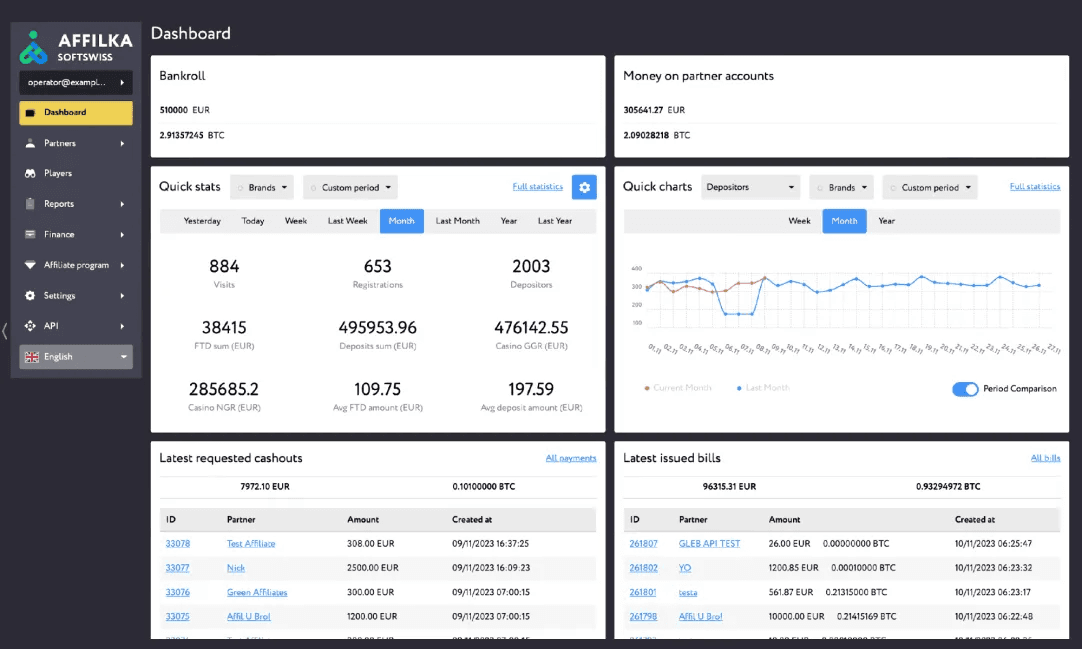
Affilka stays at the top of this shortlist when the first question is tracking proof. The public product material is unusually concrete on S2S postbacks, custom tags, click-level parameters, flexible commissions, and multi-brand setup. That makes it easier to trust the sales conversation because the public layer already shows real attribution mechanics.
Independent link. No affiliate relationship, no referral tracking.
That matters in legal markets because partner disputes usually begin at the tracking layer. If a platform cannot show how it handles click IDs, postbacks, and structured reporting, the commercial conversation gets weak fast. Affilka is one of the clearer vendors on that front.
The extra point in its favor is recent paid-media proof. The Google Click Tracker positioning gives it stronger public evidence than many rivals when the discussion moves beyond normal affiliate links into more constrained acquisition setups.
The remaining risk is app attribution depth. There is enough public material to keep Affilka in the main 8, but app and MMP workflows still need a live product demo before you treat it as the safest mobile answer.
NetRefer
NetRefer remains the enterprise-governance choice. Its public material is strong on dynamic variables, offline codes, geo targeting, customer source logic, report builder depth, and broad commission structures. That is the profile of a platform built for operators who care about governance as much as raw acquisition.

Independent link. No affiliate relationship, no referral tracking.
This is important when affiliate, finance, compliance, and country teams all need the same source of truth. NetRefer looks comfortable with that complexity. It is not just about links and payouts. It is about controlled structure.
If your operating environment is large, regulated, and spread across products or geographies, NetRefer deserves a serious place near the top of the demo stack.
The caution is practical rather than theoretical. Paid-media and app workflows still need proof in the product. The public pages show the framework clearly, but they do not remove the need for a hands-on demo of the exact attribution path you care about.
Income Access
Income Access remains the safe regulated-market choice. Its public positioning still makes sense for operators who need web, social, and mobile-app tracking, plus standard commercial models like CPA, CPI, CPL, and RevShare.

Independent link. No affiliate relationship, no referral tracking.
That multi-channel message matters because many legal-market programs are not cleanly web-only. Promo codes, regional campaigns, and mixed acquisition channels make pure-link attribution too narrow very quickly.
Income Access also still benefits from being a familiar, regulation-aware name in the category. For some operators, that safety and category fit carries real procurement value.
The weakness has not changed: public technical transparency is lighter than with the strongest tracking-led vendors. It belongs on the shortlist, but a demo must carry more of the proof burden.
MyAffiliates
MyAffiliates remains the best choice in this list when the hard part is not traffic tracking alone, but commercial-rule complexity. Its public material is very strong on formula-based commissions, QCPA, CPL, hybrid deals, country-specific CPA, unlimited sub-affiliate tiers, and custom reporting or API use.

Independent link. No affiliate relationship, no referral tracking.
That profile matters for legal-market operators with segmented partner terms, geography-specific contracts, or quality thresholds that do not fit a neat template. MyAffiliates publicly signals that it can handle complicated deal logic without pretending every partner should fit the same commercial shape.
It also stays relevant because public material around app and non-web attribution is better than average, including references to compatible integrations and broader tracking patterns.
The weakness is still documentation shape. The evidence is strong enough to keep it in the core 8, but the proof is scattered. That means the product demo has to confirm the exact workflow you need, not just the general promise.
Cellxpert
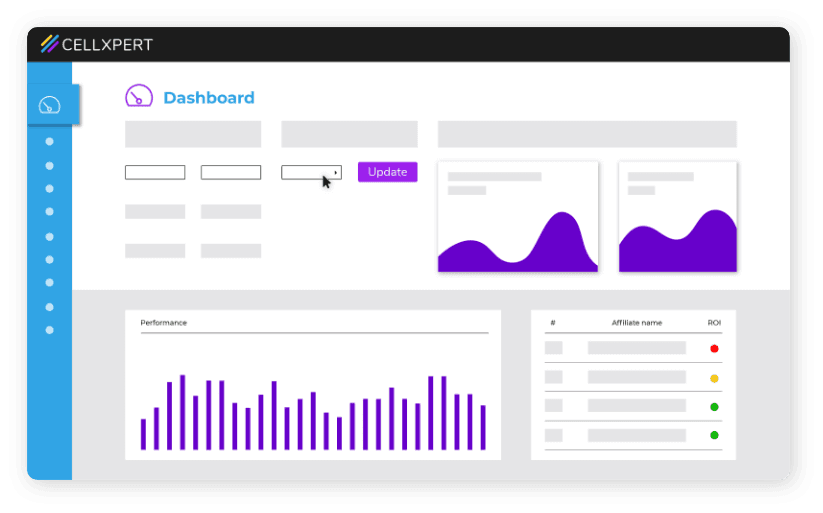
Cellxpert belongs in the main 8 because it looks like a mature iGaming platform, not an edge-case mention. The platform is especially interesting for operators who need scale plus compliance, with public positioning around real-time NGR attribution, CPA, RevShare, hybrid structures, geo controls, KYC workflows, and auditability.
Independent link. No affiliate relationship, no referral tracking.
That combination is important because legal-market affiliate software is not only about partner tracking. It is also about whether the operating model can stand up to regulated-market controls and internal scrutiny.
Cellxpert therefore earns its place as a serious shortlist vendor, especially for operators who want commercial flexibility but do not want to separate that from compliance process and controlled operations.
The main risk is proof depth in the public layer. It deserves a demo, but that demo should explicitly cover migration handling, reporting granularity, and how deeply the compliance workflows connect to real operating tasks rather than only sales language.
PartnerMatrix
PartnerMatrix stays in the core 8, but the reason is broader than tracking alone. Its real appeal is tracking plus intelligence. The public platform story covers API, FTP, S2S and postback handling, multi-brand support, and separate commission logic by product or brand.

Independent link. No affiliate relationship, no referral tracking.
That is useful on its own, but the stronger reason to keep it is the intelligence layer around affiliate visibility and channel monitoring. For some operators, that wider commercial lens matters as much as the back-office tracking mechanics.
So PartnerMatrix belongs on the shortlist when the operator wants more than a ledger of clicks and commissions. It suits teams that want affiliate operations plus a clearer view of where visibility is being created.
The demo risk is still real. Click-ID behavior and app tracking depth need to be shown live, not inferred from the public overview.
ReferOn
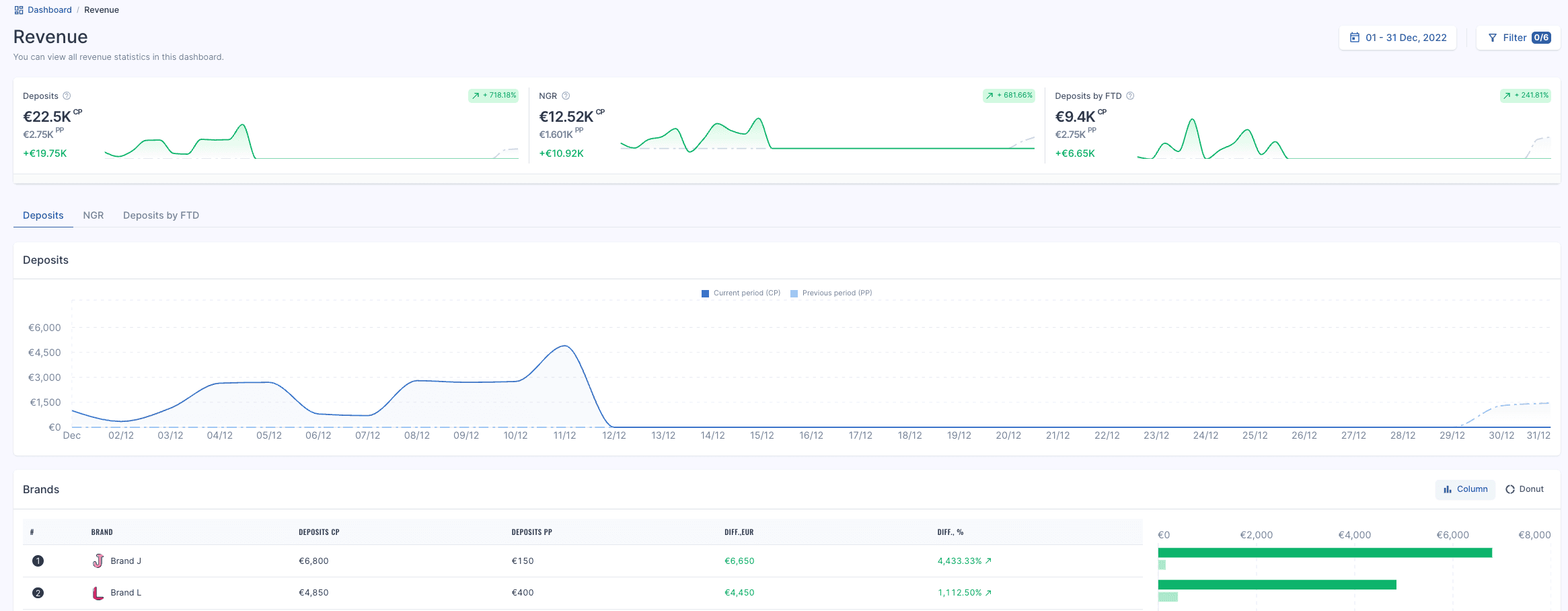
ReferOn remains one of the more convincing options for operators who care about reporting transparency. The public story is strong on dynamic reporting, enhanced click data, company grouping, and a clear casino and sportsbook focus.
Independent link. No affiliate relationship, no referral tracking.
That focus matters because some platforms sound flexible across many verticals but feel thinner when the operator needs gambling-specific commercial and reporting logic. ReferOn feels more category-aware than that.
It also keeps earning attention because its public reporting and postback behavior are easier to understand than with some rivals. That is valuable when teams want fewer black boxes in the attribution layer.
The weakness is still public proof on app attribution and MMP depth. It stays in the main 8, but mobile-heavy operators should treat the demo as the real test.
RavenTrack
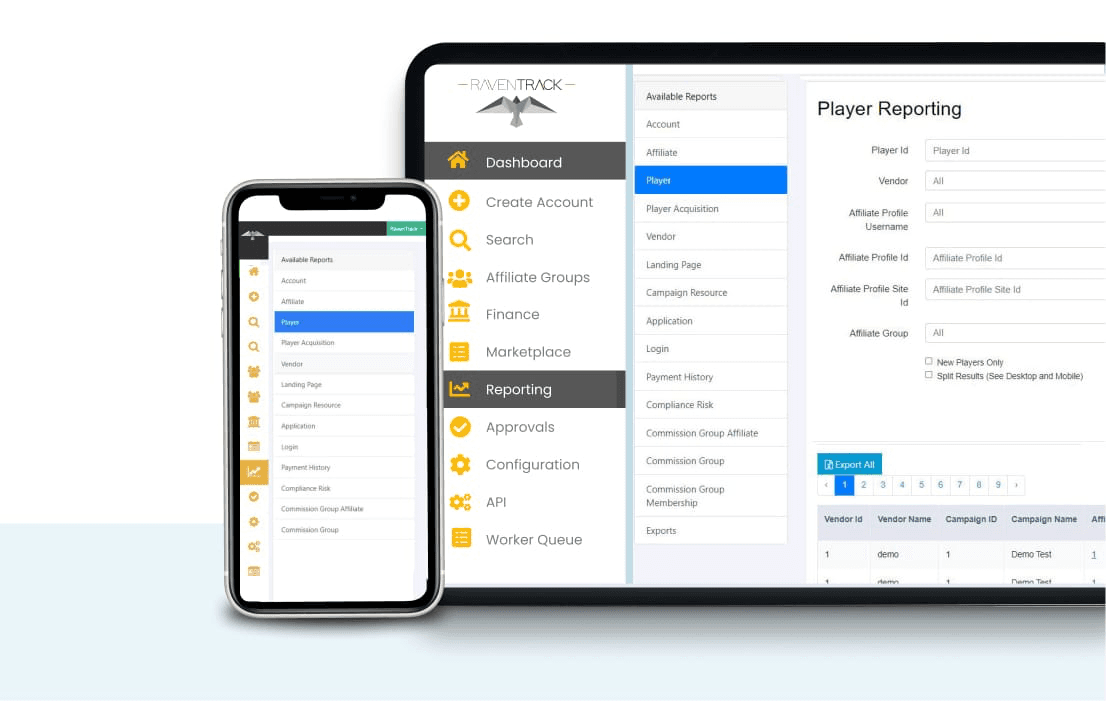
RavenTrack should now be in the main 8 because it is gaming-specific and publicly claims meaningful category scale. That alone does not prove technical depth, but it does justify treating it as more than a fringe option.
Independent link. No affiliate relationship, no referral tracking.
Its appeal is straightforward. If an operator wants a platform that speaks directly to gaming use cases and presents itself as adaptable to client needs, RavenTrack belongs in the demo conversation.
It is especially worth checking for teams that do not want a broader cross-vertical affiliate platform if they can avoid one. A gaming-specific challenger can sometimes fit the operator mindset better, even before feature depth is fully proven.
The clear caution is public technical proof. RavenTrack claims category relevance and scale, but the public layer is thinner on the low-level mechanics that would let you trust it without a thorough live walkthrough.
Recommendation
Personal Recommendation
I have direct experience with Income Access, and that matters more to me than pretending every vendor here is equally known firsthand. Income Access is reliable. It is proven. It can carry serious regulated-market programs. But that does not mean it is the most agile platform to work with. When new projects need to move fast, when you need to test less standard setups, or when you need to find a platform-level solution that actually works in practice instead of only in theory, that confidence starts to weaken.
That is where RavenTrack stood out to me. I have not run the same hands-on depth with every platform in this article, so I do not want to fake certainty about all of them. But RavenTrack looked genuinely promising in the presentations I saw. The flows were clear. The logic was easy to follow. And it checked the boxes I personally used inside Income Access, which made the comparison feel practical rather than abstract. Because of that, RavenTrack did not feel like a courtesy option. It felt like a platform that could be a very good answer if the live product behaves as clearly as the presentation.
So my practical view is simple. Keep Income Access in the conversation if reliability and existing market trust matter most. But if the operator needs more agility, clearer modern flows, and a setup that feels closer to today's real tracking and commission needs, RavenTrack deserves serious attention. For the other vendors, I would keep the shortlist logic from the article, but I would not pretend I can rank them from personal use when I cannot.
The next step is still a proof session, not a beauty contest. Ask each vendor to show one exact flow from click or code to player, deposit, commission result, and exportable reporting view. That matters more than branding. It is the same logic behind You’re Scaling the Wrong Customers (Until You Measure Retention): weak tracking creates weak commercial decisions, no matter how polished the platform pitch looks.