In-Short
Automation Is Not the First Step
The first question should not be: "Can AI do this?" The better question is: what is the workflow? If a small business cannot describe the trigger, inputs, owner, output, review point, and decision, then AI is not automating a process. It is guessing inside a fog.
Messy Work Creates Messy AI
AI can draft, summarize, compare, classify, and check. But it still needs structure. When the business process is unclear, the AI output becomes hard to trust because nobody knows what "good" means. That is why many AI experiments feel impressive in a demo and useless during a normal working week.
Start With One Repeated Workflow
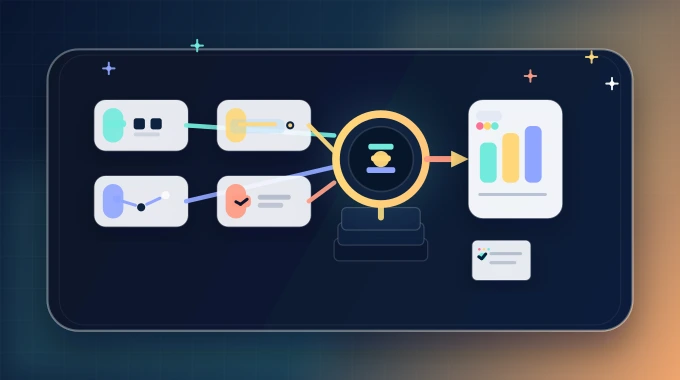
Do not start with a full AI transformation. Start with one annoying task that repeats every week: a report, a lead reply, an admin check, a document summary, or repeated copy-paste work. Map it. Clean the inputs. Define the output. Add review. Then decide which parts AI should assist. That is the bridge from prompting to operations, which is also the point of AI Orchestration Is Like a Dispatch Desk.
Think of AI Like a Conveyor Belt
A conveyor belt is useful only when the stations are clear. If nobody knows what arrives, who checks quality, or where the finished item goes, the belt just moves confusion faster. AI works the same way. Speed helps only after the workflow has shape.
AI Cannot Rescue an Undefined Process
Long Read
Many small businesses start with the wrong question.
They ask:
- Can AI automate this?
- Which model should we use?
- Which tool should we connect?
Those questions matter later. But they are not the beginning.
The beginning is more ordinary:
What exactly is the repeated work?
If a process already depends on hidden knowledge, unclear ownership, messy inputs, and personal judgement that nobody has written down, AI will not magically make it operational. It may make it faster. It may make it look polished. But the same weak process remains underneath.
That is why some AI projects feel exciting for one week, then disappear.
The demo works because one person knows the context. The workflow fails because the business does not have a system.